Common symptoms
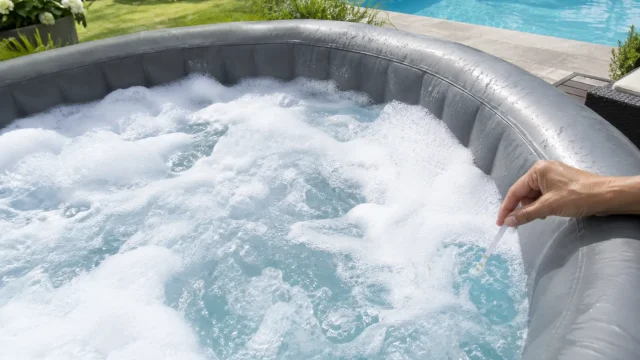
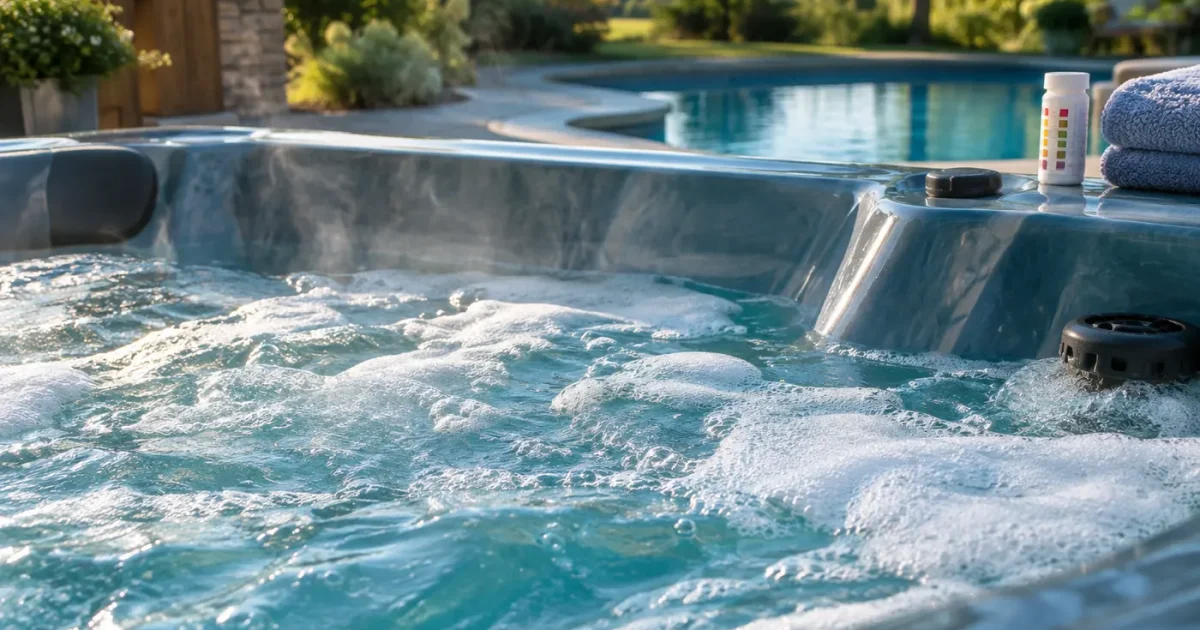
- White foam piles up on the surface as soon as the jets come on.
- The foam is still there several minutes after the jets stop.
- A greasy or scummy ring forms at the waterline.
- The water feels slick or soapy on your skin, even after a shock.
- Foam shows up right after guests, a new chemical, or a refill after winterizing.
- The water is also hazy, or it smells strongly of chlorine.
Quick checks before anything else
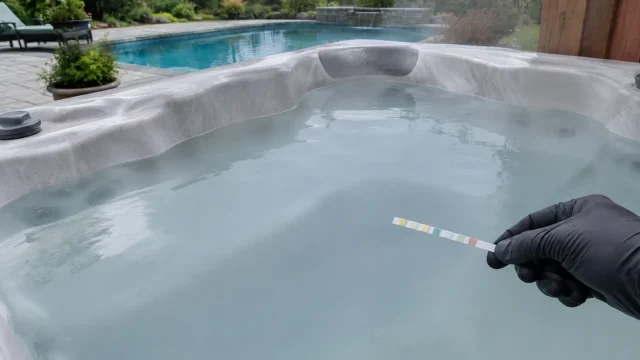
- Test free chlorine or bromine, pH and total alkalinity with an in-date test strip.
- Test calcium hardness too. Soft water foams more.
- Pull the filter cartridge and look for a gray or greasy film on the pleats.
- Think back over the last few days: guests, a new lotion, swimsuits washed in detergent, or a cover cleaned with soap.
- Read the bottle of anything you added lately, such as an algaecide.
- Count the weeks since the last drain and refill.
What makes a hot tub foam?
Foam is almost always soap or something like it. The jets beat it into bubbles, the same way a bubble bath foams under the tap. These are the sources the makers’ manuals name.
- Soap from skin and swimsuits Hot Spring’s manual says soap comes in from people’s bodies, which keep some soap after a shower, and from swimsuits, which hold soap after washing. It foams when the jets run.
- Lotions, hair products and makeup Bestway’s Lay-Z-Spa manual says cosmetic products, lotions and other residue on skin quickly degrade water quality.
- Low calcium hardness (soft water) Hot Spring says low calcium can increase foaming. This often shows up after filling from a water softener.
- Cleaning products Lay-Z-Spa’s water chart lists detergent from the wrong cleaning products. Shell or cover cleaner that was not rinsed off ends up in the water.
- Too much of a chemical Lay-Z-Spa names overuse of algaecide. Hot Spring warns that the antifreeze used to winterize the plumbing can make foam after a refill.
- Old water Soap keeps building up. Hot Spring says no chemical you add removes it, so at some point only fresh water works.
- Test the waterSanitizer, pH, alkalinity, calcium
- Fix the readingsCalcium, then alkalinity, then pH
- Shock and clean the filterJets on high, cover open
- Knock the foam downA spa defoamer, dosed per the label
- Is the foam back within a few soaks?
Yes: the water is loaded with soap. Drain, clean the filter, and refill.
No: keep the soap out with showers and plain-rinsed swimsuits, and test weekly.
Step-by-step: how to get rid of hot tub foam
We start with free tests and work up to a drain and refill. A defoamer clears foam in minutes, but if you skip the steps around it, the foam comes back.
- Test before you add anything. Dip a fresh strip or use a liquid kit. The CDC says hot tub water needs at least 3 ppm (parts per million) of free chlorine, or 4 to 8 ppm of bromine, and a pH of 7.0 to 7.8. Hot Spring says to store test supplies in a dark, cool, dry place, because old or damp strips read wrong.
- Check calcium hardness. Hot Spring balances calcium first, then alkalinity, then pH. It lists 75 to 150 ppm for its spas, and Intex lists 150 to 250 ppm for its inflatable spas. If your reading is below your manual’s range, raise it with a calcium hardness increaser, dosed per the label. Hot Spring says softened water is fine as long as calcium stays in range.
- Balance alkalinity, then pH. Total alkalinity is the water’s buffer that holds pH steady. Hot Spring says to set it before pH, because an off reading makes pH hard to fix and stops the sanitizer from working well. Use your manual’s range and our hot tub chemical calculator for the amounts.
- Shock the water. Shock is a large dose of chlorine, or a non-chlorine oxidizer called MPS, that burns off body waste and chloramines (used-up chlorine that smells and stings). Hot Spring says to add it into the filter area with the jet pump on high for at least 10 minutes, then leave the cover open at least 20 minutes so the gas can vent. Stay out until free chlorine drops below 5 ppm.
- Clean the filter with a degreaser. Soak the cartridge in a spa filter cleaner as the package directs, then hose it from top to bottom between the pleats. Hot Spring says to use a filter degreaser to remove oil buildup, and to clean cartridges monthly. Intex says to inspect and clean its cartridges every day to once a week. Never wash a cartridge with dish soap or laundry soap, because it goes straight back into the water.
- Knock the foam down with a defoamer. A defoamer, also sold as a foam inhibitor or foam remover, breaks the bubbles fast. Dose it per the label and add it like any other chemical, into the filter area with the jets running. Hot Spring is clear that foam inhibitors suppress foam but cannot remove soap, so treat this as a stopgap.
- Wipe the scum line. Hot Spring says to wipe a scum ring off with a clean rag. If the ring is heavy, its manual says to drain the spa, use a spa surface cleaner, and refill. Rinse any cleaner off with fresh water before you refill.
- Cut the soap going in. Ask everyone to shower before they soak, as the CDC, Intex and Bestway all advise. Lay-Z-Spa says to avoid washing swimsuits in detergent, so rinse them in plain water between uses. When you clean the cover with a mild soap, rinse it well so no film drips into the tub.
- Drain and refill when it keeps coming back. If foam returns within a few soaks after all of the above, the water is saturated with soap. Hot Spring says water lasts about four months, depending on how much soap goes in. Intex gives a formula: spa gallons divided by 3, divided by users per day, equals days between changes. Turn the power off at the breaker before you drain, and clean the filter before you refill.
Stop. Never mix spa chemicals together, and never pour a defoamer, shock and pH product in at the same time. Add one, let the jets run, then add the next. Keep the cover open after a shock, and do not soak while free chlorine is above 5 ppm.
| What you notice | Likely cause | Next step |
|---|---|---|
| Foam after guests or a busy weekend | Soap and lotion from bathers | Shock, clean the filter, defoamer |
| Foam right after a refill | Low calcium, or antifreeze from winterizing | Test calcium; shock and defoam |
| Foam after a new chemical | Too much algaecide, or a product not made for spas | Read the label; partial drain and refill |
| Foam plus slick water that never feels clean | Old water full of soap | Drain and refill |
| Foam plus cloudy water | Low sanitizer or a dirty filter | See the cloudy water guide |
Ozone, salt or chemicals only: does your setup change the fix?
Ozone or salt system. Hot Spring says ozone and its salt system can oxidize soap residue, which slows foam down. Its manual still says a foam inhibitor may be needed, and heavy soap still calls for a water change.
Chemicals only. Chlorine, bromine and MPS shock clear body waste and chloramines, but Hot Spring says soap is not oxidized by any chemical you add. On these tubs, keeping soap out and changing the water on schedule do most of the work.
Inflatable spas. Small tubs need fresh water more often. Intex’s own example is a 210-gallon spa with two users a day, which by its formula needs new water every 35 days. Bestway tells Lay-Z-Spa owners to check and clean the cartridges every day and change them every week. Our inflatable hot tub foam guide covers those models.
If the water is hazy as well as foamy, work through our cloudy hot tub water guide too. For the full set of water numbers, see our hot tub water problems guide.
When to call a pool or spa pro
- Foam and haze return within days of a full drain, refill and new cartridge, even with good readings. Have the pump, plumbing and filter housing checked.
- Your tub has ozone and you see no ozone bubbles. Hot Spring’s manual says ozone bubbles can be seen at the heater return on its HighLife spas, so ask the dealer to test the ozone unit.
- Jets are weak or a flow message appears, which means less water reaches the filter. Start with our weak hot tub jets guide.
- Anyone gets a rash or feels sick after soaking. Stop using the tub until it is cleaned and tested.
Common questions
Why is my hot tub so foamy with the jets on?
The jets whip soap in the water into bubbles. Hot Spring’s manual says soap from people’s skin and swimsuits typically makes spa water foam when the jets run. Low calcium hardness makes it worse, and old water holds more soap.
Will shock get rid of foam in a hot tub?
Not on its own. Shock clears body waste and chloramines, which helps the water, but Hot Spring says soap is not oxidized by any chemical you add; only ozone can oxidize it. Shock, clean the filter, then use a defoamer, and drain if the foam keeps returning.
How do I get rid of hot tub foam without draining?
Fix the readings, shock with the cover open, degrease the filter, and add a spa defoamer per its label. Then stop new soap from coming in with showers and plain-rinsed swimsuits. This works when the soap load is light; heavy soap needs fresh water.
Why is my hot tub foamy after adding chemicals?
Some products foam on their own. Lay-Z-Spa lists too much algaecide as a cause of foam, and Hot Spring warns that winterizing antifreeze can foam after a refill. Check that every product is made for spas and that you used the label dose.
Does low pH in hot tubs cause foam?
The maker manuals we checked do not list low pH as a cause of foam. Hot Spring ties foam to soap and low calcium hardness, and ties low pH to corrosion, eye irritation and lost sanitizer. Fix a low pH anyway, once alkalinity is in range.
Is it normal to have foam in a hot tub?
A little foam when the jets run is common, because soap builds up in every tub over time. Heavy foam that stays, or water that feels slick, means the soap load is high. That is your signal to clean the filter, defoam, and plan a drain and refill.