Common symptoms
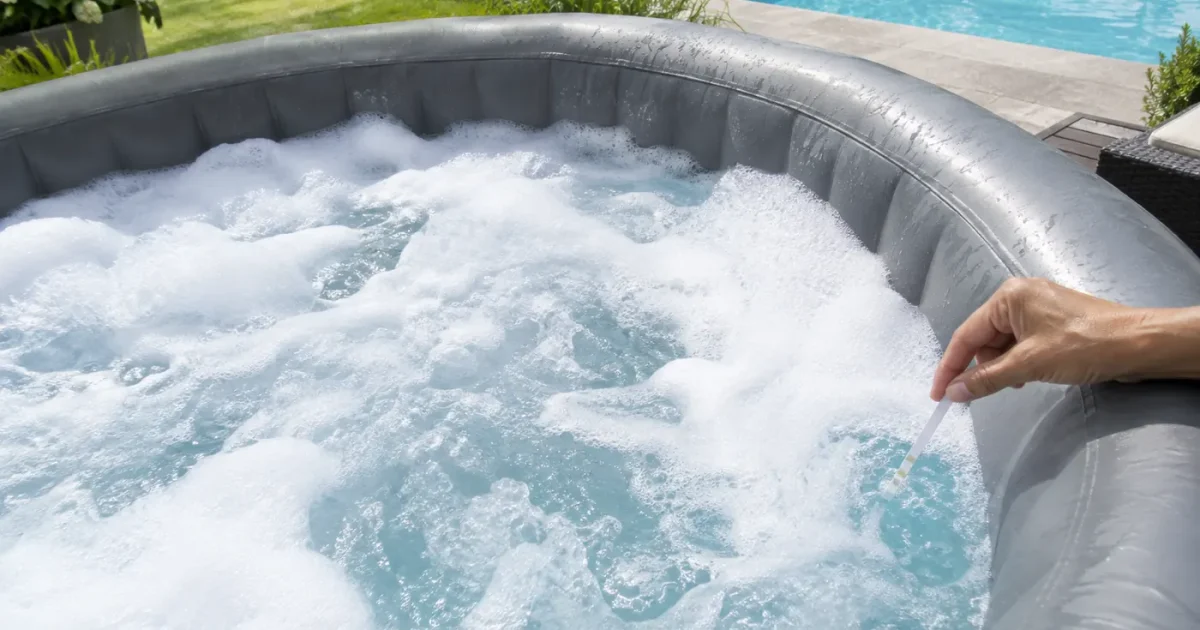
- White foam builds on the surface as soon as you turn on the bubbles.
- A layer of foam is still there the next morning, under the cover.
- Foam shows up right after you added chemicals or after a busy weekend of use.
- The water also looks dull or hazy, or feels slick on your skin.
- A fresh fill foams even though nobody has used it yet.
Quick checks before anything else
- Turn off the bubbles. Foam that fades with the air off is soap or residue being whipped up.
- Test free chlorine, pH and total alkalinity with a fresh test strip.
- Check calcium hardness too, if your strips read it. Intex strips do.
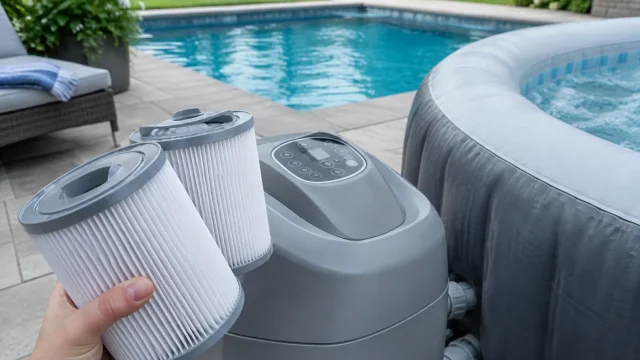
- Pull the filter cartridge and look at it. Rinse it in plain water.
- Ask what went in lately: lotion, hair products, swimsuits washed in detergent, or extra algaecide.
- Work out how old the water is and when you last drained the tub.
What causes foam in an inflatable hot tub?
Foam is air trapped in water that holds something soapy. On an inflatable tub, the bubble massage blows air through the floor, so anything soapy in the water turns to foam fast.
- Soap, cosmetics and body oils Bestway’s Lay-Z-Spa team names shampoo, deodorants, detergents and natural body oils. Foam builds each time the bubbles run.
- Detergent in swimwear Suits washed in laundry detergent carry it into the tub. Hot Spring’s spa manual names swimwear as one of the two main sources of soap.
- Cleaning products left behind Soap used on the liner or the cartridge that was not rinsed off. A fresh fill foams right away.
- Too much algaecide Lay-Z-Spa’s water chart lists excess algaecide as a cause of foaming. Foam appears soon after a dose.
- Low calcium (soft water) Intex lists water foaming as a result of calcium hardness that is too low. Hot Spring says soft water can increase foaming.
- Old water Residue builds up over weeks until no chemical can keep up. The water stays foamy and dull even with good readings.
Step-by-step: how to get rid of hot tub foam
We test before we add anything, because guessing throws other readings off. Then we knock the foam down, find its source, and change the water if the soap load is too high. Follow each product’s label, and add chemicals one at a time.
- Turn off the bubbles and test. Use a fresh strip for free chlorine, pH and total alkalinity. CDC says hot tub water should have at least 3 ppm (parts per million) of free chlorine, or 4 to 8 ppm of bromine, and a pH of 7.0 to 7.8. If the readings are off, fix them before you worry about the foam.
- Balance alkalinity, then pH, then sanitizer. Lay-Z-Spa gives that order and aims for 80 to 120 ppm total alkalinity and a pH of 7.2 to 7.6. It says to allow at least 2 hours between each type of chemical. Intex and Bestway’s SaluSpa manual give similar targets. Our hot tub chemical calculator works out doses for your tub’s gallons.
- Check calcium hardness. Intex lists 150 to 250 ppm as the target range, and it names foaming as a sign of calcium that is too low. If you fill with very soft water, a calcium increaser dosed by its label can help. Do not go above the range; high calcium causes scale and cloudy water.
- Rinse the cartridge with plain water. Run it under lukewarm water until the water runs clear. Lay-Z-Spa says not to use detergent, washing-up liquid or other chemicals on it, since anything soapy goes straight back into the tub. Replace a cartridge that stays dirty or is falling apart.
- Knock the foam down with a defoamer. A spa defoamer (foam remover) collapses the bubbles in minutes. Follow its label: Bestway’s ClearWater Foam Remover, for example, says 50 ml per 1,000 liters of water, poured over the foam with the filter running. It treats the foam, not the soap, so keep going with the next steps.
- Cut off the soap source. Everyone should shower before getting in; Intex, Bestway and CDC all ask for it. Skip lotions, makeup and hair products before a soak. Rinse swimsuits in plain water instead of washing them in detergent.
- Go easy on algaecide. If foam started after an algaecide dose, stop adding more and let the filter run. Keep sanitizer in range so the tub does not need extra algaecide in the first place.
- Change the water when it is loaded. Hot Spring says soap is very hard to remove because the usual spa chemicals do not break it down, and that heavy soap may need a water change. Intex’s rule is spa gallons divided by 3, divided by the average number of users per day: a 210-gallon tub with 2 users a day needs fresh water about every 35 days. Bestway’s SaluSpa manual says to change the water every 3 days if you use no chemicals at all.
- Clean and rinse the liner before you refill. While the tub is empty, Intex says to wipe the inside wall with a sponge and a mild soap solution, then rinse thoroughly. Rinse until no suds remain, or the new water will foam from the start.
Stop. Never mix spa chemicals together or pour one on top of another. Add each one on its own and let it dissolve. Do not run the bubbles with the cover on; Bestway warns trapped air can damage the cover and cause injury.
Defoamer vs shock vs a water change
| Method | What it does | Use it when |
|---|---|---|
| Defoamer | Collapses the foam fast. The soap stays in the water. | You want to use the tub tonight and the readings are good. |
| Shock | Restores sanitizer and burns off waste. Hot Spring says it does not remove soap. | Sanitizer is low, or the water smells or looks dull. |
| Water change | Removes the soap and residue completely. | Foam keeps returning, or the water is old. |
In practice we use all three in that order. A defoamer buys time, shock keeps the water safe, and a drain and refill ends the problem. An Intex PureSpa holds about 210 gallons (4-person) or 290 gallons (6-person), so a little soap goes a long way. Our hot tub foam guide covers hard-shell spas.
Intex vs Bestway targets. Intex lists pH 7.2 to 7.8, total alkalinity 80 to 120 ppm and free chlorine 2 to 4 ppm. Bestway’s SaluSpa manual lists pH 7.4 to 7.6, alkalinity 80 to 120 ppm and free chlorine 2 to 4 ppm, while Lay-Z-Spa’s guide asks for 3 to 5 ppm. We keep chlorine at or above CDC’s 3 ppm minimum on any tub.
When to call a pool or spa pro
- The water stays cloudy and foamy after a full drain, clean, rinse and refill with balanced readings. Our cloudy hot tub water guide covers the next checks.
- The tub shows a flow code (E90 on Intex, E02 on Bestway) along with poor water quality. Low flow means the water is not being filtered; our Bestway error codes guide covers the E02 flush.
- Slime or film keeps coming back on the liner. Intex says to see a spa professional for biofilm removal products and advice.
- Anyone gets a rash or feels ill after a soak. Stop using the tub until the water is fixed.
Spa stores can test a water sample for you, which Intex suggests if you are unsure of your strips. For other inflatable tub problems, start at our inflatable hot tub problems page.
Common questions
Why is my hot tub so foamy with the jets on?
The air from the jets or bubbles whips soapy water into foam. The soap comes from skin, hair products and swimsuits washed in detergent. Low calcium hardness makes it worse. With the bubbles off the foam fades, which tells you it is residue in the water, not a fault in the tub.
Is it safe to go in a foamy hot tub?
It depends on the readings, not the foam. CDC says to check that free chlorine is at least 3 ppm, or bromine is 4 to 8 ppm, and pH is 7.0 to 7.8 before you get in. If those are in range, light foam is mostly soap. If they are off, or the water is cloudy or smells, stay out until you fix it.
Will shock get rid of foam in a hot tub?
Not on its own. Hot Spring’s manual says soap is not broken down by the usual spa chemicals, and that foam inhibitors suppress foam without removing the soap. Shock still matters for keeping the water sanitized, but heavy foam calls for a defoamer and, if it keeps coming back, a water change.
Why is my hot tub foamy after adding chemicals?
Some treatment chemicals can cause foam. Lay-Z-Spa says foaming can be a normal result of the chemicals used to keep the water healthy, and its water chart lists too much algaecide as a cause. Add one chemical at a time, dose by the label for your gallons, and let the filter run between doses.
What can I use to defoam a hot tub?
Use a spa defoamer or foam remover made for hot tubs, dosed by its label. It works in minutes but does not remove the soap, so cut the soap source and change the water if foam keeps returning. Household products are not a substitute. Baking soda, for example, is sodium bicarbonate, the same chemical Hot Spring sells to raise alkalinity, so it shifts your balance and does nothing for foam.
How do I reduce foam in my hot tub without draining it?
Turn off the bubbles, balance the water, rinse the cartridge in plain water, and use a defoamer. Then stop new soap going in: showers before soaking, no lotions, and swimsuits rinsed instead of washed. If foam still builds every time you use the tub, the water is overloaded and a drain and refill is the real fix.